

Three Quick Things
New Moon Edition April 2026

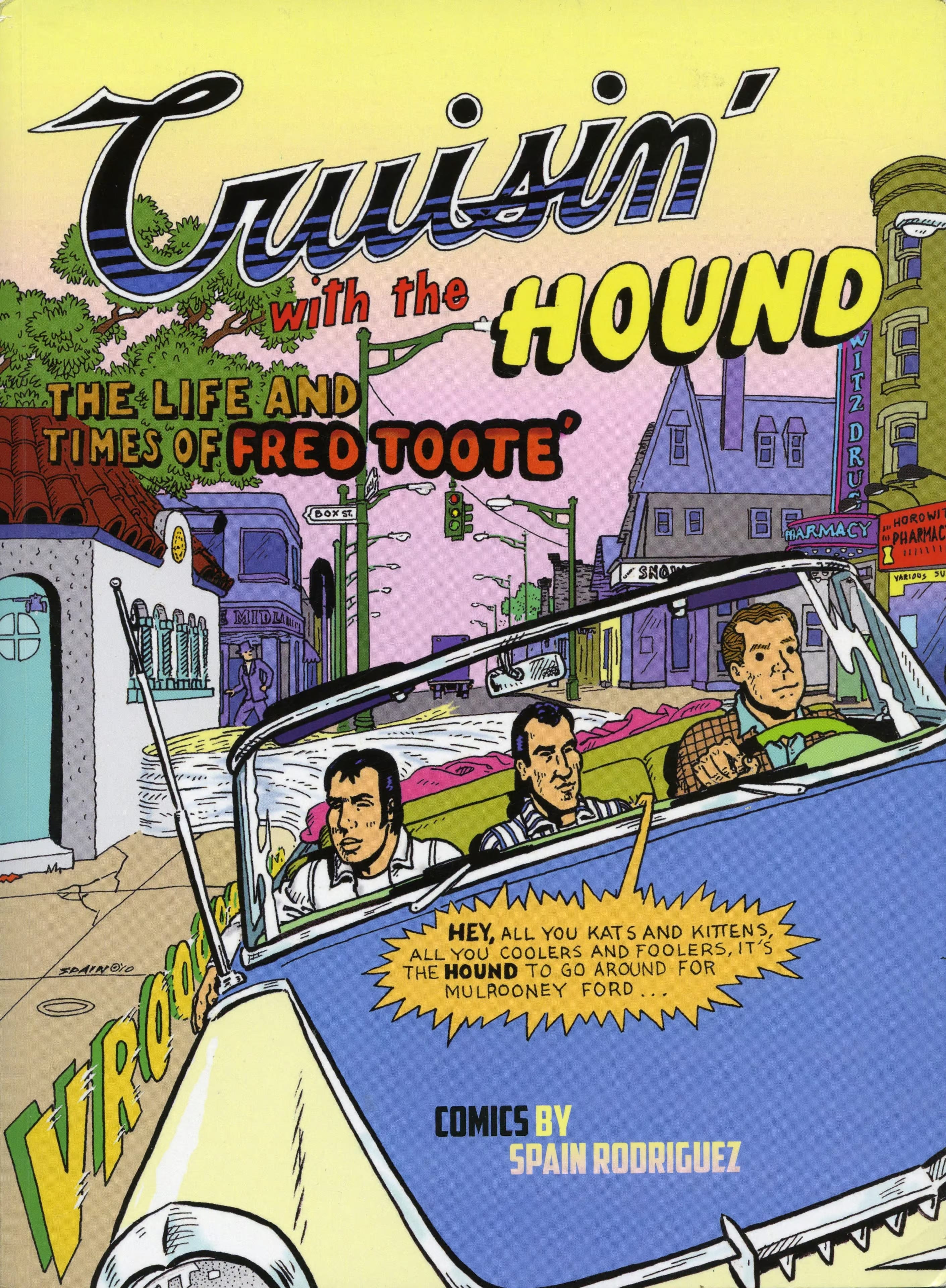
Who was the first rock ‘n’ roll disc jockey? There are a few contenders and all but one of them are black. That one isn’t Alan Freed, who’s said to be the source of the phrase rock ‘n’ roll. He’s often cited too as the first white deejay to capture the sounds of the “Negro Interest” stations that began in 1947 playing rhythm & blues on the radio. As so often is the case, there’s much more to the story, which our friend and supporter Bruce Allen hips us to - and it’s one worth knowing (HERE). Thank you, Bruce!
The truth is, the guy who deserves the credit is George “Hound Dog” Lorenz, who rocked the airwaves first from a couple of small stations in the late Forties in Upstate New York and a gig he commuted to in Cleveland. That’s when Freed enters the scene and the plot thickens. Lorenz eventually broadcast from a 50,000 watt station that reached the entire eastern U.S. with his jive talking Hound Dog persona. What he accomplished in radio is less known by many of us and under-appreciated. It was BIG.
But Lorenz and Freed, and many who followed them, owe a nod to Nat D. Williams at WDIA in Memphis, Tennessee (HERE) where R&B music first hit the airwaves full time. Rufus Thomas was a deejay there. So was Bobby “Blue” Bland, and another was a guy named B.B. King, who said he owed his successful career to the exposure that little station brought him. What they created quickly spread throughout the country. Two stations with that format in 1948 grew to 200 by 1952. Those radio personalities, and a few white deejays like Hound Dog and Moon Dog, set the stage for rock ‘n’ roll radio when Top 40 finally came calling in the mid-Fifties. Their genius rocked our lives.
Six degrees of separation. I’ve always believed in it and experienced it repeatedly throughout my life. In our Freeform Radio Project, it has been at the heart of what we’ve accomplished to date. Rob Abrams ran across our website (HERE) and got in touch with me. He had worked at WMAS with Brian Kreizenbeck and Ham Agnew. Wanted to know if I knew how he could reach them. I did, he did, and he came back to us with Founding Member support. Told us some great stories, too (HERE).
Rob introduced us to Richard Brody, who had a highly successful career in radio in the Boston area. Rich introduced us to Steve Thibodeau, the guy who got Rich started in radio. Both of them did great interviews with us (HERE) and (HERE), and Steve turned us on to Larry Cox, an out there jock with a very droll sense of humor who worked at freeform rocker WNTN in Newton, MA and WBLM in Litchfield, Maine, near Lewiston.
Larry did shows that were hip, excessively laconic, and casually funning the big gun deejays at WBCN in Boston, the self-proclaimed “station that changed everything.” Larry changed things, too, like the way we heard those overinflated personalities as freeform radio took hold in a big way for a little while. Larry kept it real, as you can hear for yourself (HERE). Not sure where if anywhere Larry is these days, but here’s hoping the separation will be closed - maybe by this post - and he’ll get in touch.
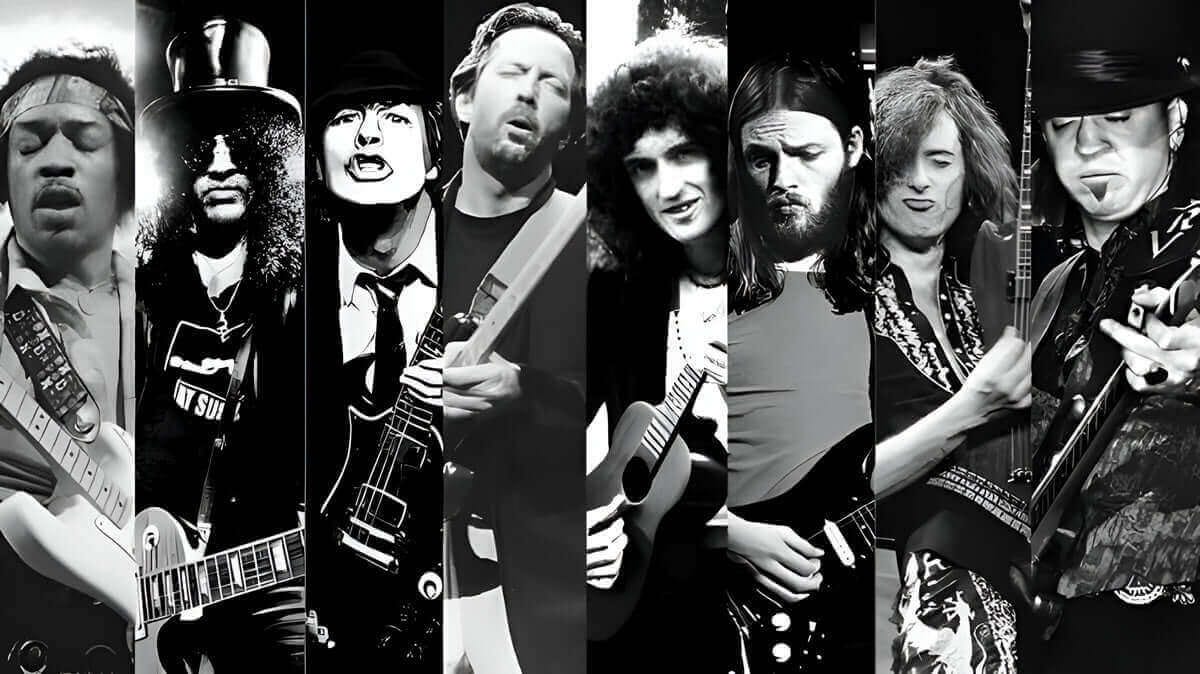
Have you ever played Fast Five? I work with a great guy named Larry Gondelman, a lapsed lawyer who teaches rock music courses at American University in the nation’s capital. Isn’t it comforting to note that positive things actually take place there? Give thanks! When he sent me the syllabus for his current course - rock’s great guitarists - it brought to mind those endless, mostly unanswerable questions that rattle around rock ‘n’ roll like Keith Moon’s drum kit crashing from the risers.
Which is the greatest band? The best singer? Songwriter? Guitarist? Drummer?What’s your favorite song? Album? Concert? Whom among the too soon deceased would you choose, if you could choose just one, to resurrect so they could perform for you? Everybody loves these kinds of questions because they’re so damned difficult to answer. And your answers, of course, matter only to you. So there’s that.
Fast Five is a variation on the theme that removes time to mull over the choices and lets you just react. Look at that series of questions. Pretend I’m asking you and you answer: tell me your five best (fill in the blank) in five seconds. Whatever comes to mind is what we’re looking for. There’s probably value in that spontaneity. Afterwards, going back and thinking through which of your answers you’d change and why is a part of the process, too. It reminds us how nebulous those questions can be and how fleeting our attachment to the answers. Rock ‘n’ roll will never die. Neither will debate.
Rock on sweetie!!
Nice!